
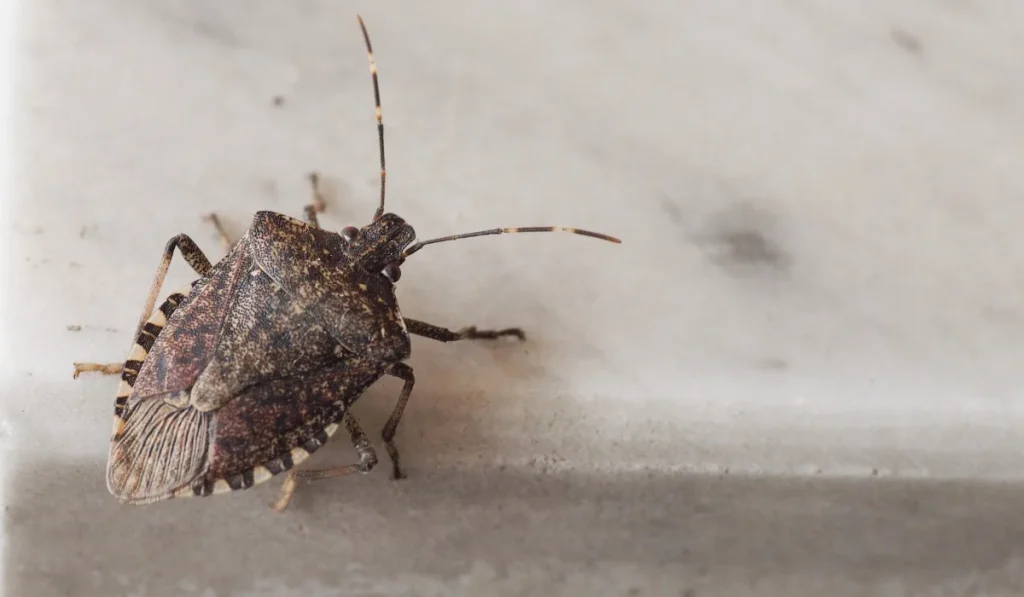
A few brown, shield-shaped insects on your siding may not seem unusual at first. Within days, more can gather around windows, crawl beneath exterior trim, and begin appearing inside. This seasonal pattern is familiar to homeowners across Richmond, Henrico, Hanover, Chesterfield, and surrounding Central Virginia communities.
Most of these visitors are brown marmorated stink bugs. As summer ends and daylight hours shorten, adult stink bugs leave their outdoor feeding areas and search for protected places where they can spend the colder months. Homes provide dry, quiet shelter behind siding, inside attics, and within wall voids.
Stink bugs invade Central Virginia homes for shelter, not because they want food or a place to reproduce. Once they find a suitable opening, they can remain hidden for weeks or months before appearing near windows, ceilings, or light fixtures.
Understanding why stink bugs invade Central Virginia homes can help you respond before large numbers reach the exterior. Early inspection, timely repairs, and targeted service can reduce the number that settle inside.
Why Stink Bugs Invade Central Virginia Homes in September
Stink bugs invade Central Virginia homes in September because changing daylight signals the start of their seasonal search for winter shelter. Their movement does not depend on a single cold night or the first frost. Activity can begin while daytime temperatures still feel like summer.
Field research involving Virginia locations has documented brown marmorated stink bugs moving toward buildings from mid-September through October. This concentrated fall window explains why a property with little activity in August may suddenly have dozens of insects resting on the siding a few weeks later.
Shorter Days Trigger Seasonal Movement
Brown marmorated stink bugs spend spring and summer feeding outdoors on trees, garden plants, crops, and ornamental landscaping. As the days become shorter, adult stink bugs stop focusing on feeding and begin looking for narrow, protected spaces.
The National Invasive Species Information Center, which shares information from university and federal researchers, identifies overwintering behavior as a major reason these insects gather on houses and other structures. Once the seasonal movement begins, gaps around siding, windows, vents, rooflines, and utility openings can lead them into attics and wall spaces.
Virginia’s Fall Activity Can Build Quickly
Virginia-based research has shown that much of the annual movement toward buildings occurs during a relatively short period in early fall. Conditions can vary by property, but September and October are the main months when homeowners should watch for insects resting on exterior walls.
Sunny afternoon conditions may increase visible activity because warm surfaces give stink bugs a convenient place to gather. You may see only a few insects in the morning and find a much larger group on the same wall later in the day.
How to Identify the Stink Bugs Entering Your Home
The stink bugs entering Central Virginia homes in large numbers are often brown marmorated stink bugs, or Halyomorpha halys. Adults have mottled brown coloring, a broad shield-shaped body, and a size similar to a dime.
Alternating light and dark markings appear along the outer edge of the abdomen. The last two sections of each antenna also have pale bands. These details can help you separate brown marmorated stink bugs from native species with similar body shapes.
Virginia has several types of stink bugs, and not every shield-shaped insect near your home is a brown marmorated stink bug. A professional inspection can confirm the species when identification is unclear or when insects keep appearing in large numbers.
Why Stink Bugs Produce an Odor
Stink bugs release a strong-smelling fluid when they feel threatened, are handled roughly, or are crushed. The odor is a defense response rather than a sign that the insect has damaged your home.
The smell can remain on hands, curtains, furniture, vacuum components, and other surfaces. Crushing a stink bug against a wall often creates more cleanup than collecting it intact.
How Stink Bugs Get Inside Central Virginia Homes
Stink bugs can enter Central Virginia homes through openings that are easy to overlook. Common access points include gaps around doors, windows, siding, exterior trim, utility lines, chimneys, soffits, fascia boards, and roof edges.
Damaged screens, worn weather stripping, loose siding, attic vents, foundation vents, and unprotected drainage openings may also provide access. Stink bugs have flat bodies that allow them to squeeze into narrow spaces.
Several insects near one window may suggest a nearby opening, but the actual entry point could be elsewhere. A stink bug that enters near the roofline can travel through an attic or wall void before appearing in a second-floor bedroom.
Newer homes are not automatically protected. Small construction gaps around cables, pipes, vents, and siding transitions can create enough space for seasonal pests to enter. Older properties may have added entry points from settling, aging seals, or previous repairs.
Why Some Central Virginia Properties See More Stink Bugs
Stink bug activity varies across Richmond, Henrico, Hanover, Chesterfield, and nearby communities. The surrounding landscape, exterior materials, property condition, and number of access points all influence how many insects gather around a building.
Homes near wooded areas, farms, gardens, orchards, and dense landscaping may experience more activity because these environments provide feeding sites during spring and summer. This can affect rural properties as well as suburban neighborhoods near undeveloped land.
Exterior construction can also influence where stink bugs settle. Wood, stone, brick, and textured siding provide sheltered edges and seams where insects can rest. Loose trim, warped siding, and gaps along roof transitions offer further protection.
Do not limit your inspection to one side of the house. Stink bugs often gather on warm, sunlit walls, but activity can occur on any side based on wind, shade, vegetation, exterior color, and available shelter.
Properties with recurring fall activity often have multiple entry points rather than one large opening. A complete exterior inspection is more useful than treating only the wall where the insects are visible.
What Happens After Stink Bugs Move Indoors
After stink bugs enter your home, they usually settle in attics, wall voids, gaps behind trim, and other quiet areas. They prefer dry, protected spaces where they can remain inactive through colder weather.
This behavior explains why visible activity may stop after the fall migration. The insects have not necessarily left. Many remain hidden until indoor warmth, a sunny winter day, or changing spring conditions cause them to move.
| Outdoor Behavior in Fall | Indoor Behavior in Winter |
| Adults gather on siding, windows, vents, and rooflines. | Adults rest in attics, walls, and other protected spaces. |
| They search for openings that lead to winter shelter. | They remain in a low-activity state for long periods. |
| Large numbers may appear within a short time. | Individual insects may enter rooms during warm spells. |
| Exterior prevention can block entry. | Indoor removal does not correct exterior access points. |
Stink Bugs Enter a Low-Activity Winter State
Stink bugs spend winter in a low-activity state called diapause. Their movement and development slow while they remain inside a protected location.
Indoor heating can interrupt that resting period. A stink bug may crawl from a wall space into a room and move toward a bright window. These winter sightings can look like a new invasion even though the insect entered during the previous fall.
Stink Bugs Do Not Reproduce Inside Your Home
Brown marmorated stink bugs do not establish breeding populations inside houses. They do not lay eggs in attics, feed on wood, consume stored food, or damage insulation.
The U.S. Environmental Protection Agency’s brown marmorated stink bug guidance states that these insects do not bite people or pets and are not known to transmit disease. Their indoor impact comes from their odor, repeated appearances, and tendency to gather in large numbers.
How to Keep Stink Bugs Out Before Fall
Preventing stink bugs from entering your Central Virginia home works best before the main September movement. Once they settle behind siding or inside wall spaces, stopping every indoor appearance becomes much harder.
Inspect windows, exterior doors, siding seams, roof edges, vents, and utility penetrations during late summer. Replace worn weather stripping, repair damaged screens, adjust loose door sweeps, and seal appropriate gaps around cables, pipes, and air-conditioning lines.
Pay close attention to places where different building materials meet. Siding-to-brick transitions, roof intersections, window trim, and utility openings often contain narrow gaps that are difficult to see from the ground.
Protect Vents and Drainage Openings Correctly
Attic vents, foundation vents, soffit vents, and weep holes support airflow or drainage. They should not be sealed shut. Proper screening or guards can help block insects while allowing each opening to continue serving its intended purpose.
High entry points are easy to miss without a close inspection. Repeated sightings in upstairs rooms may indicate gaps around attic vents, chimney flashing, fascia boards, soffits, or siding near the roofline.
Avoid working on ladders or steep roof areas when you cannot access them safely. A pest professional can inspect difficult areas and help distinguish between active entry points and harmless exterior gaps.
Remove Indoor Stink Bugs Without Crushing Them
For an occasional stink bug indoors, place a cup or container over the insect, slide a piece of paper underneath, and carry it outside. You can also collect it with a tissue as long as you avoid squeezing it.
A handheld vacuum can remove several insects quickly, but the odor may remain inside the machine. Empty the container outdoors after use, or use a disposable vacuum bag when practical.
Indoor sprays and fogging products do not correct the source of a recurring stink bug problem. They may affect exposed insects, but they cannot close exterior gaps or reach every bug hidden in a wall void.
When Professional Stink Bug Control Makes Sense
Professional stink bug control may be appropriate when insects gather in large numbers, return every fall, enter through high or concealed openings, or continue reaching living spaces after basic repairs.
Homes with complex rooflines, multiple siding transitions, tall attic vents, or difficult-to-reach exterior gaps often require a closer inspection. A trained technician can evaluate gathering areas, locate likely access points, and recommend a treatment plan based on the structure.
Timing matters. Service completed before peak fall movement can address vulnerable exterior areas before stink bugs settle inside. Treating only the insects already visible in a room may leave the main entry problem unchanged.
GreenShield Home & Pest Solution provides eco-friendly pest control trusted by more than 10,000 Central Virginia homes and businesses. The family-owned company proudly serves Richmond, Henrico, Hanover, Chesterfield, and surrounding areas with EPA-compliant service practices that are friendly to kids and pets.
GreenShield technicians receive 80 hours of training before working independently, followed by weekly and monthly training. This preparation supports careful inspections, clear explanations, and recommendations based on what is happening at your property.
Stop the September Rush Before Stink Bugs Get Inside
Stink bugs invade Central Virginia homes each September because shorter days trigger their search for dry winter shelter. Small openings around siding, windows, vents, doors, utility lines, and roof edges can give them access to spaces where they remain hidden until winter or spring.
The best time to respond is before large numbers gather on the exterior. Timely repairs, careful inspection, and targeted service can reduce entry and limit indoor sightings later in the season.
Learn more about GreenShield Home & Pest Solution or contact the GreenShield team for help with stink bug activity in Richmond, Henrico, Hanover, Chesterfield, or another Central Virginia community.
