
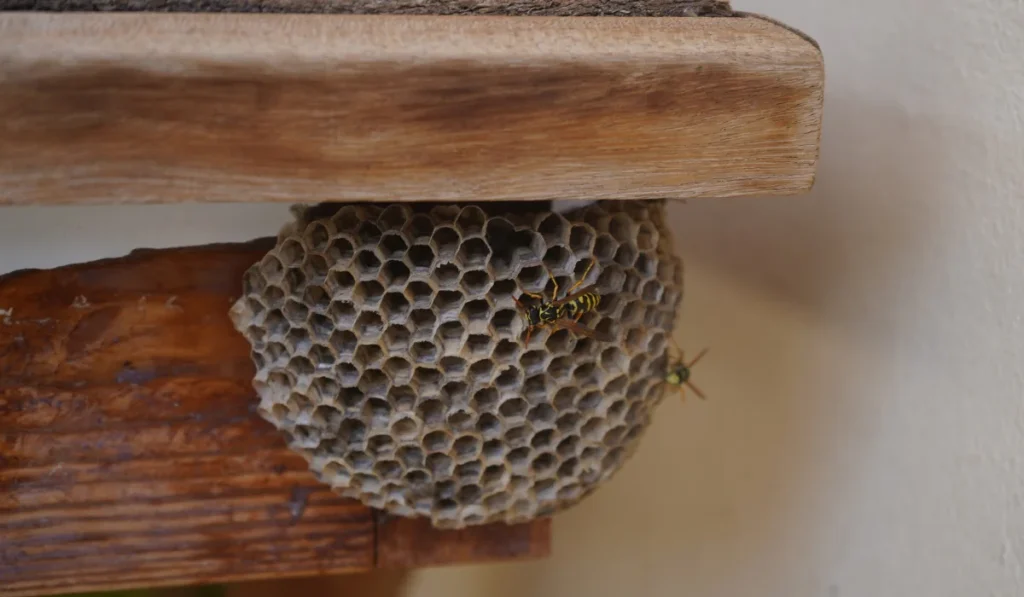
A hornet vs wasp comparison begins with a simple fact: hornets are wasps, but not every wasp is a hornet. Knowing the difference can help when a stinging insect is circling your Richmond porch, entering a gap near your Chesterfield driveway, or flying toward a paper nest in a backyard tree.
The hornet vs wasp question becomes more relevant in fall. Social wasp colonies have had months to grow, so more workers may be searching for food or defending a nest. Yellowjackets often gather near outdoor meals, trash containers, and fallen fruit. Hornets may appear near trees, rooflines, sheds, attics, and other protected spaces.
You do not need to move closer to identify the insect. Its body shape, coloring, flight pattern, and nesting location can provide useful clues. Once you understand what is present, you can decide whether to monitor the activity from a safe distance or request professional service.
Hornet vs Wasp: What Is the Difference?
The main difference between hornet and wasp species involves classification. “Wasp” is a broad term covering many social and solitary insects. Hornets belong to a smaller group of social wasps that live in colonies and usually build nests in protected or enclosed locations.
All hornets are wasps, but paper wasps and yellowjackets are not true hornets. Common names can make identification confusing because they do not always match scientific classifications. The bald-faced hornet is one familiar example.
According to Virginia Cooperative Extension guidance on social wasps, the bald-faced hornet is an aerial yellowjacket rather than a true hornet. Its black-and-white coloring, large size, and enclosed paper nest explain why many Central Virginia property owners identify it as a hornet.
The European hornet is a true hornet found in Virginia. It has a heavy body with reddish-brown and yellow markings. European hornets may nest inside hollow trees, wall cavities, barns, attics, and other sheltered areas. They can also fly after sunset and gather near porch lights or illuminated windows.
How to Identify a Hornet vs Wasp Around Your Property
Hornet vs wasp identification should always begin from a safe distance. You do not need to examine every stripe or approach an active nest. Watching where the insects travel and how they behave can often provide enough information for a preliminary identification.
Homes and businesses throughout Richmond, Henrico, Hanover, and Chesterfield offer many possible nesting sites. Porch ceilings, deck rails, shrubs, sheds, mature trees, roof gaps, utility openings, and wall voids can all shelter social wasps.
Compare Body Shape, Size, and Markings
Paper wasps usually have slender bodies, narrow waists, and long legs that hang below them during flight. Their coloring may include brown, reddish-brown, black, or yellow. Their thin shape is one of the easiest ways to distinguish them from the compact build of a yellowjacket.
Yellowjackets often have bold black-and-yellow markings and fast, direct flight patterns. You may see them around food, drinks, recycling containers, or a concealed nest entrance. Bald-faced hornets are mostly black with white or ivory markings, while European hornets have larger brown-and-yellow bodies.
Size can support an identification, but it should not be the only clue. A large wasp is not automatically a hornet. A bald-faced hornet vs wasp comparison can also be misleading because the bald-faced hornet already belongs to the wasp family.
Check the Nest Shape and Location
A hornet vs wasp nest comparison often provides a clearer answer than body color alone. Each group tends to favor certain nest designs and locations.
| Insect | Common Appearance | Typical Nest Location |
|---|---|---|
| Paper wasp | Slender body with long legs | Open, umbrella-shaped comb beneath eaves, porch ceilings, and deck rails |
| Yellowjacket | Compact body with black-and-yellow markings | Underground, inside wall voids, or in other concealed spaces |
| Bald-faced hornet | Mostly black with white markings | Enclosed gray paper nest in trees, shrubs, or on structures |
| European hornet | Large brown-and-yellow body | Hollow trees, attics, barns, wall cavities, and other enclosed spaces |
Paper wasp nests have exposed cells that are usually visible from below. Yellowjacket nests can be harder to locate because the colony may be underground or inside a structure. A steady stream of insects entering one hole in the lawn, foundation, siding, or roofline may be the only visible sign.
Bald-faced hornets build enclosed aerial nests that may hang from a tree branch or a protected section of a building. European hornets usually use an existing cavity. Watch the flight path from a reasonable distance rather than trying to inspect the nest opening.
Why Wasps and Hornets Are More Noticeable in Fall
Wasps in fall can seem to appear without warning, but their colonies have usually been developing since spring. A social wasp colony begins with a queen and grows as new workers are raised. By late summer and early fall, a property may have far more active workers than it did several months earlier.
The University of Minnesota’s guidance on wasps and bees notes that some yellowjacket colonies may contain thousands of workers near their seasonal peak. This does not mean every nest reaches that size, but it helps explain the increased activity around patios, restaurants, parks, dumpsters, and outdoor gatherings.
Food-seeking behavior also changes as the season progresses. Yellowjackets may gather around fallen apples, sweet drinks, desserts, recycling containers, pet food, and uncovered trash. With more workers searching across a wider area, encounters become more common around Central Virginia homes and businesses.
Homeowners often describe fall wasps as more aggressive. In many cases, the colony is simply larger, food searches are more visible, and more workers may respond when a nest is disturbed. Their venom does not become stronger as the weather cools.
Hornets follow a similar annual colony cycle. As colder weather arrives, workers and males die, while newly fertilized queens leave to spend winter in protected locations. Old social wasp nests are generally not reused, but you should never assume a nest is inactive while insects are still entering and leaving it.
Why Correct Identification Changes Your Response
The hornet vs wasp difference affects your response because the species and nest location determine the level of exposure. A small paper wasp nest under an unused shed roof presents a different situation from a yellowjacket entrance beside a front step. A European hornet colony inside an attic also requires a different treatment plan from an exposed aerial nest.
A hornet or wasp sting cannot be judged by the insect’s common name alone. Female social wasps can sting more than once because their stingers generally do not remain in the skin. The outcome depends on the number of stings, the sting location, and the person’s sensitivity.
Trouble breathing, swelling of the mouth or face, throat tightness, faintness, or a widespread reaction after a sting requires emergency medical attention. MedlinePlus provides guidance on insect bites and stings, including symptoms that may signal a severe allergic response.
Nest placement also determines what should happen next. Sealing an active opening in siding, masonry, or a roofline can trap workers inside a wall void. The insects may search for another exit and enter an occupied room instead of returning outdoors.
Knocking down, flooding, burning, or covering an active nest can trigger defensive behavior without reaching the full colony. Ground nests, wall voids, attics, elevated nests, and colonies near entrances, play areas, or customer walkways should be inspected before service begins.
How to Reduce Fall Wasp and Hornet Encounters
You can reduce some fall wasp and hornet activity by limiting food sources near areas where people gather. Keep outdoor trash containers closed, rinse bottles and cans before recycling them, clean food spills promptly, and remove fallen fruit. Cover drinks during outdoor meals, and look inside open cans or cups before taking a sip.
Fall yard work requires extra care. Before trimming shrubs, clearing leaves, mowing near ground openings, or moving stored materials, watch the area for repeated insect flights. A steady path into a hole, tree cavity, wall gap, shed, or roofline opening often points to an active colony.
These steps may reduce encounters, but they will not eliminate an established nest. Do not stand near the entrance or disturb the surrounding area to get a closer look. A photo taken from a safe distance may help a trained technician identify the insect and prepare for the inspection.
Get Help With Hornets and Wasps in Central Virginia
Understanding the hornet vs wasp difference gives you a useful starting point, but the nest location and level of activity determine the safest response. Ground nests, structural openings, and colonies near doors, playgrounds, sidewalks, patios, or commercial entrances deserve prompt attention.
GreenShield Home & Pest Solution provides eco-friendly pest control for Central Virginia homes and businesses. The family-owned company is trusted by more than 10,000 customers and proudly serves Richmond, Henrico, Hanover, Chesterfield, and nearby communities. GreenShield uses EPA-compliant service practices designed to be friendly to kids and pets.
A technician can assess the insect, locate the nesting area, and select an approach suited to the species and property. Rather than applying products without a clear plan, the service focuses on the nest location, surrounding conditions, and areas where people regularly pass.
If you are seeing repeated stinging insect activity or have found an active nest, contact GreenShield Home & Pest Solution to discuss the hornet vs wasp activity around your Central Virginia property.
